
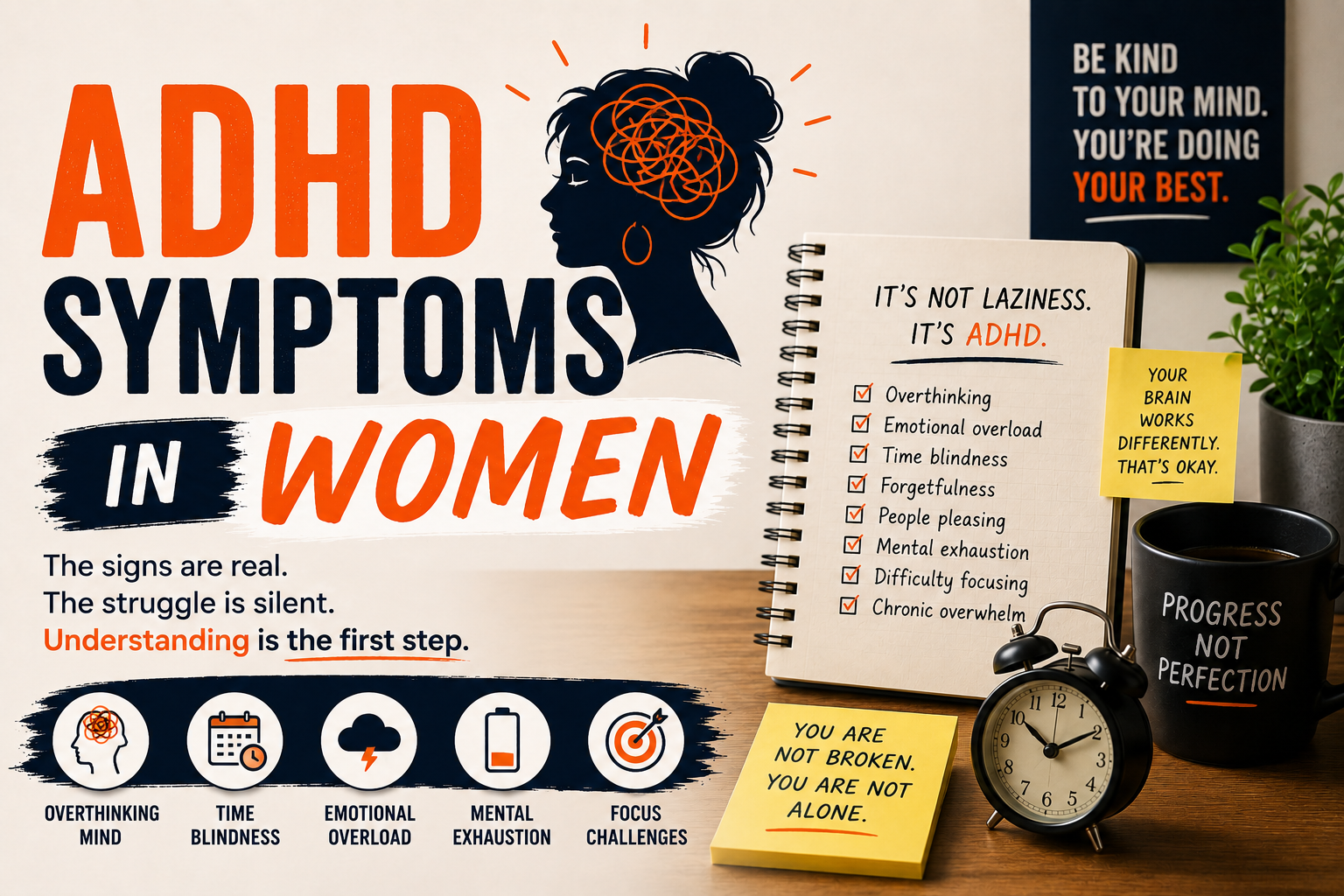
Many women spend years wondering why everyday life feels harder than it seems for everyone else. They may call themselves lazy, disorganized, emotional, or “not good enough”—without realizing ADHD could be the reason.
For decades, ADHD was thought to mostly affect young boys who were hyperactive and couldn’t sit still. Because of this stereotype, countless girls and women grew up without a diagnosis. Instead of receiving support, they were often misunderstood.
In this article, we’ll explore the common symptoms of ADHD in women, why it’s frequently missed, and what you can do if these experiences sound familiar.
What Is ADHD?
Attention-Deficit/Hyperactivity Disorder (ADHD) is a neurodevelopmental condition that affects executive functions—the mental skills responsible for planning, organizing, focusing, regulating emotions, and managing time.
ADHD doesn’t always look the same. While some people are physically hyperactive, others experience constant mental restlessness that isn’t obvious to others.
Many women fall into this second group, which is one reason ADHD is often overlooked.
Why ADHD in Women Is Often Missed
Many girls learn from an early age to:
- Stay quiet.
- Mask their struggles.
- Work extra hard to fit in.
- Hide mistakes.
- Appear organized, even when overwhelmed.
As a result, ADHD symptoms may not be disruptive enough to attract attention from teachers or parents.
Instead, women may be labeled as:
- Careless
- Emotional
- Forgetful
- Sensitive
- Lazy
- Unmotivated
- “Not living up to their potential”
These labels can affect confidence for years before ADHD is recognized.
Common ADHD Symptoms in Women
1. Constant Overthinking
Many women describe having dozens of thoughts running through their minds at once.
You may:
- Replay conversations.
- Worry about future events.
- Jump from one idea to another.
- Find it difficult to “switch off” your brain.
2. Chronic Disorganization
Despite your best intentions, you may struggle to:
- Keep your room organized.
- Stay on top of paperwork.
- Remember appointments.
- Finish household tasks.
It’s not because you don’t care—it can be a challenge with executive functioning.
3. Difficulty Focusing
ADHD isn’t always about an inability to focus.
Sometimes it’s about inconsistent focus.
You may:
- Lose concentration during routine tasks.
- Hyperfocus on hobbies you enjoy.
- Miss details.
- Start many projects but finish few.
4. Emotional Sensitivity
Many women with ADHD experience emotions intensely.
You might:
- Feel criticism deeply.
- Become overwhelmed easily.
- Cry more quickly than expected.
- Have difficulty calming down after stressful situations.
Some people also experience rejection sensitivity, where perceived criticism or rejection feels especially painful.
5. Time Blindness
Time may feel unpredictable.
You may:
- Underestimate how long tasks take.
- Arrive late despite trying not to.
- Lose track of time while working.
- Feel like the day disappeared.
6. Procrastination
You know the task is important.
You want to start.
Yet somehow…
You don’t.
This isn’t necessarily laziness. For many people with ADHD, getting started is one of the hardest parts of a task.
7. Mental Exhaustion
Because many women spend years masking their ADHD symptoms, they often feel mentally drained.
Constantly trying to appear organized, attentive, and in control can be exhausting.
8. Forgetfulness
You may frequently:
- Misplace your phone or keys.
- Forget birthdays.
- Miss appointments.
- Walk into a room and forget why.
- Start one task and become distracted by another.
9. People-Pleasing
Some women become experts at pleasing others to avoid criticism.
They may:
- Say yes too often.
- Avoid conflict.
- Put everyone else’s needs first.
- Feel guilty for setting boundaries.
10. Feeling “Different”
Many women describe a lifelong feeling that something is different about the way they think or process the world.
They may wonder:
“Why does everything seem easier for everyone else?”
Receiving an ADHD diagnosis can provide an explanation—and a path toward better support.
ADHD Looks Different in Every Woman
Not everyone experiences the same symptoms.
Some women are energetic and talkative.
Others appear calm on the outside while feeling mentally overwhelmed on the inside.
ADHD exists on a spectrum, and every person’s experience is unique.
When Should You Seek Professional Advice?
If these symptoms have been present since childhood and regularly interfere with your work, education, relationships, or daily life, consider speaking with a qualified healthcare professional who can evaluate your situation.
A proper assessment can help determine whether ADHD or another condition may be contributing to your challenges.
Living Well with ADHD
A diagnosis doesn’t define you.
Many women find that understanding their brain helps them develop strategies that work for them, such as:
- Using planners and reminders.
- Breaking tasks into smaller steps.
- Creating simple routines.
- Prioritizing sleep and exercise.
- Practicing self-compassion.
- Seeking professional support when needed.
Progress comes from finding systems that fit your brain—not from expecting your brain to work like someone else’s.
Frequently Asked Questions
Can women have ADHD without being hyperactive?
Yes. Many women have primarily inattentive symptoms, such as difficulty focusing, forgetfulness, and disorganization, rather than obvious physical hyperactivity.
Why is ADHD often diagnosed later in women?
Girls may learn to mask their symptoms, and older stereotypes focused on hyperactive boys. As a result, many women aren’t evaluated until adulthood.
Does ADHD get worse with age?
Symptoms can become more noticeable when life responsibilities increase, such as during university, work, parenting, or major life changes.
Can ADHD be mistaken for anxiety or depression?
Yes. ADHD can occur alongside anxiety or depression, and some symptoms overlap. That’s why a thorough evaluation by a qualified healthcare professional is important.
About ADHDer Anmol
At ADHDer Anmol, our mission is simple:
Understand Your Brain. Work With It, Not Against It.
We share practical, evidence-informed ADHD education, productivity strategies, and personal experiences to help you better understand yourself and build a life that works for your brain.
Disclaimer: This article is for educational purposes only and should not be considered medical advice. If ADHD symptoms are significantly affecting your daily life, consult a qualified healthcare professional for assessment and guidance.