
If you’ve ever made a to-do list, looked at it for an hour, and still accomplished nothing—you are not alone.
Many adults with ADHD don’t struggle because they’re lazy or unmotivated. They struggle because ADHD affects executive functions—the mental skills that help us plan, prioritize, organize, and complete tasks.
For years, I blamed myself for not being “disciplined enough.” After learning more about ADHD and experimenting with different systems, I realized something important:
The goal isn’t to force yourself to work like everyone else. It’s to build a productivity system that works with your ADHD brain.
In this article, I’ll share practical strategies that have helped me and many others with ADHD become more productive without feeling overwhelmed.
Why Productivity Feels Different with ADHD
ADHD can make it difficult to:
- Start tasks
- Stay focused
- Estimate time accurately
- Prioritize what’s important
- Switch between activities
- Remember deadlines
- Avoid distractions
That doesn’t mean you can’t be productive. It means you may need different strategies than someone without ADHD.
1. Stop Trying to Remember Everything
One of the biggest mistakes I made was trying to keep everything in my head.
Your brain is for thinking, not storing endless reminders.
What to do instead
Write everything down.
Use:
- A notebook
- A notes app
- Google Keep
- Apple Notes
- Notion
- Todoist
Create one trusted place where you capture ideas, tasks, and reminders.
2. Break Big Tasks into Tiny Steps
Write blog article
Break it down:
- Open laptop
- Research topic
- Write outline
- Write introduction
- Add headings
- Edit
- Publish
Small tasks reduce overwhelm and make it easier to get started.
3. Use the “2-Minute Rule”
If something takes less than two minutes, do it immediately.
Examples:
- Reply to a quick email
- Put away your dishes
- Schedule an appointment
- File a document
This prevents small tasks from piling up into a mountain of stress.
4. Try the Pomodoro Technique
Many people with ADHD find long work sessions exhausting.
Instead, try working in short, focused blocks.
Example:
- 25 minutes of focused work
- 5-minute break
Repeat four times, then take a longer break.
Experiment with different intervals—some people prefer 15/5 or 45/10.
5. Remove Visual Distractions
If your desk is covered with papers, gadgets, and random items, your brain has to process all of that visual information.
Before starting work:
- Clear your desk
- Close unnecessary browser tabs
- Put your phone away if possible
- Turn off non-essential notifications
A simpler environment often makes it easier to focus.
6. Use Timers
One common ADHD challenge is time blindness—losing track of time or underestimating how long tasks will take.
Use:
- A phone timer
- A smartwatch
- A kitchen timer
- Time-tracking apps
Seeing time pass can make it easier to stay on track.
7. Start Before You Feel Ready
Many people wait for motivation before beginning.
Unfortunately, motivation often comes after you start.
Tell yourself:
“I’ll work on this for just five minutes.”
Once you begin, continuing usually feels much easier.
8. Build Simple Routines
Your brain spends energy making decisions.
Routines reduce that mental load.
For example:
Morning Routine
- Wake up
- Drink water
- Stretch
- Review today’s priorities
- Start your first important task
Evening Routine
- Prepare tomorrow’s to-do list
- Tidy your workspace
- Charge devices
- Wind down before bed
They don’t have to be perfect—just repeatable.
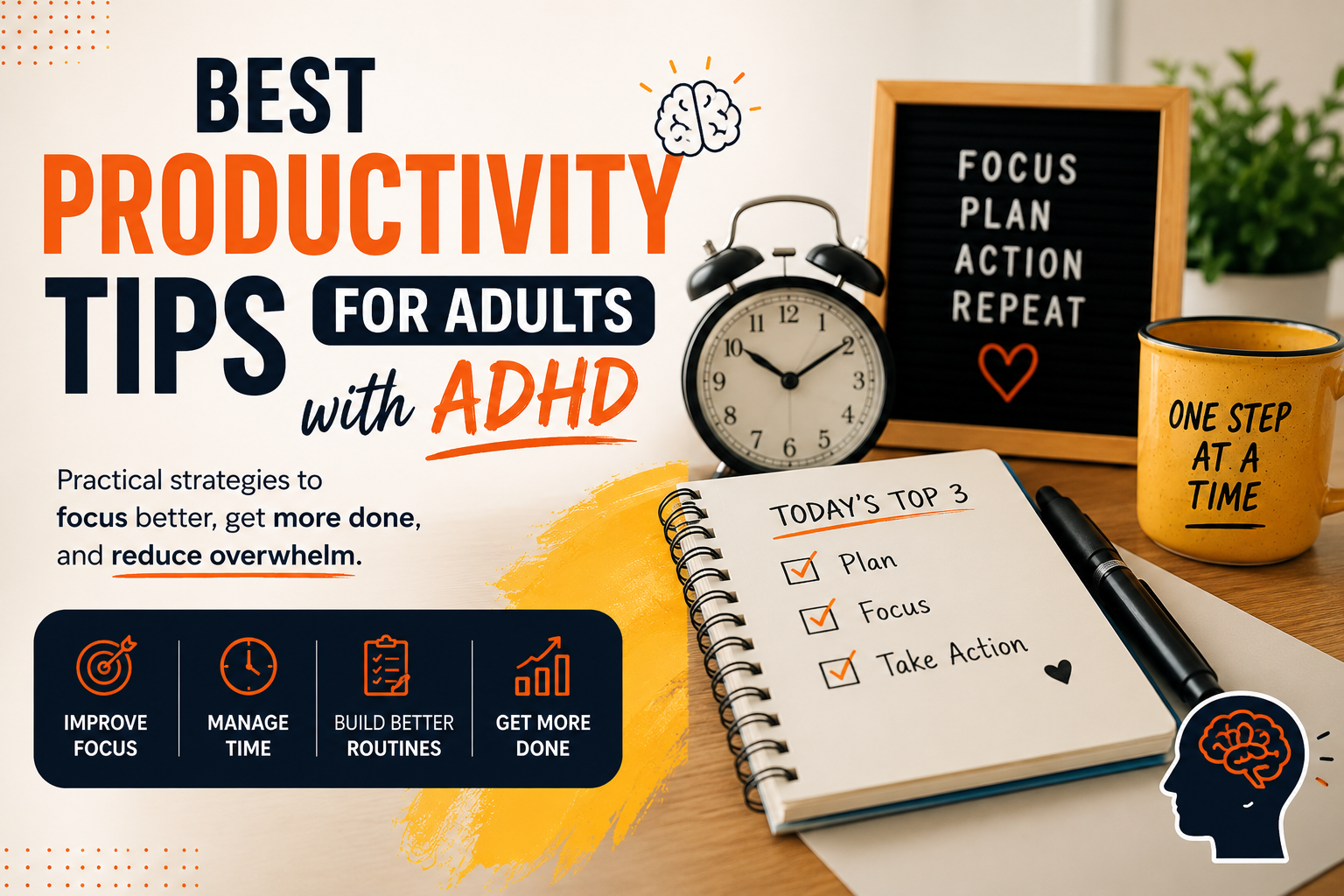
9. Prioritize Three Tasks
Instead of writing a list of 20 tasks, choose your Top 3 for the day.
Ask yourself:
“If I only finish three things today, what should they be?”
This keeps your focus on what matters most.
10. Celebrate Small Wins
ADHD brains often focus on what’s unfinished.
Take a moment to acknowledge progress.
Completed a difficult email?
Finished one chapter?
Published a blog post?
Celebrate it.
Small wins build momentum.
11. Work with Your Energy, Not Against It
Pay attention to when you naturally feel most focused.
For example:
Morning:
- Writing
- Studying
- Problem-solving
Afternoon:
- Meetings
- Emails
- Admin tasks
Evening:
- Creative work
- Reading
- Planning
Design your day around your energy if your schedule allows.
12. Use Body Doubling
Some people with ADHD find it easier to focus when another person is present—even if they’re working on something completely different.
This is called body doubling.
You can:
- Work with a friend.
- Join a virtual coworking session.
- Sit in a library or café.
The shared environment can make it easier to stay engaged.
13. Reduce Perfectionism
Perfectionism often leads to procrastination.
Instead of aiming for perfect, aim for finished.
A completed project can always be improved later.
An unfinished project can’t help anyone.
14. Protect Your Sleep
Poor sleep can make ADHD symptoms feel worse.
Try to:
- Go to bed at a consistent time.
- Limit screen use before sleep.
- Keep your bedroom dark and quiet.
- Avoid caffeine late in the day if it affects your sleep.
15. Take Care of Your Body
Basic habits support your brain, too.
Aim to:
- Move your body regularly.
- Eat balanced meals.
- Stay hydrated.
- Take breaks during long work sessions.
These habits won’t “cure” ADHD, but they can make it easier to manage daily challenges.
My Personal Productivity System
As someone with ADHD, I stopped trying to copy productivity advice that didn’t fit my brain.
Today, I focus on:
- Planning only a few priorities each day.
- Breaking work into small steps.
- Using reminders instead of relying on memory.
- Taking breaks before I burn out.
- Accepting that some days will be more productive than others.
This approach has helped me build ADHDer Anmol while continuing to learn about myself and my ADHD.
Mistakes to Avoid
- Trying to multitask constantly.
- Creating unrealistic daily schedules.
- Waiting for motivation.
- Comparing your productivity to others.
- Ignoring sleep and self-care.
- Expecting perfection every day.
Frequently Asked Questions
What’s the best productivity method for ADHD?
There isn’t one method that works for everyone. Many people benefit from task breakdowns, timers, simple routines, and limiting distractions.
Should I use paper or digital planners?
Use whichever you’ll actually use consistently. Some people prefer paper; others like digital reminders. The best system is the one you stick with.
Can productivity apps cure ADHD?
No. Apps can support organization and planning, but they don’t treat ADHD. They work best alongside healthy habits and, when appropriate, professional treatment.
Final Thoughts
Living with ADHD doesn’t mean you can’t be productive.
It means you may need a different approach—one that respects how your brain works instead of fighting against it.
Remember, productivity isn’t about doing more. It’s about doing what matters in a way that’s sustainable for you.
At ADHDer Anmol, my mission is to share practical strategies, honest experiences, and reliable information to help people with ADHD build lives that work for them—not against them.
Related Articles
- What Is ADHD? A Beginner’s Guide
- ADHD vs Laziness: Understanding the Difference
- 10 Signs You Might Have ADHD as an Adult
- My ADHD Diagnosis Story: What I Wish I Knew Earlier
- Understanding Executive Dysfunction
- How to Stop Procrastinating with ADHD
Disclaimer: This article is for educational purposes only and should not be considered medical advice. If ADHD symptoms are significantly affecting your daily life, consult a qualified healthcare professional for assessment and guidance.