
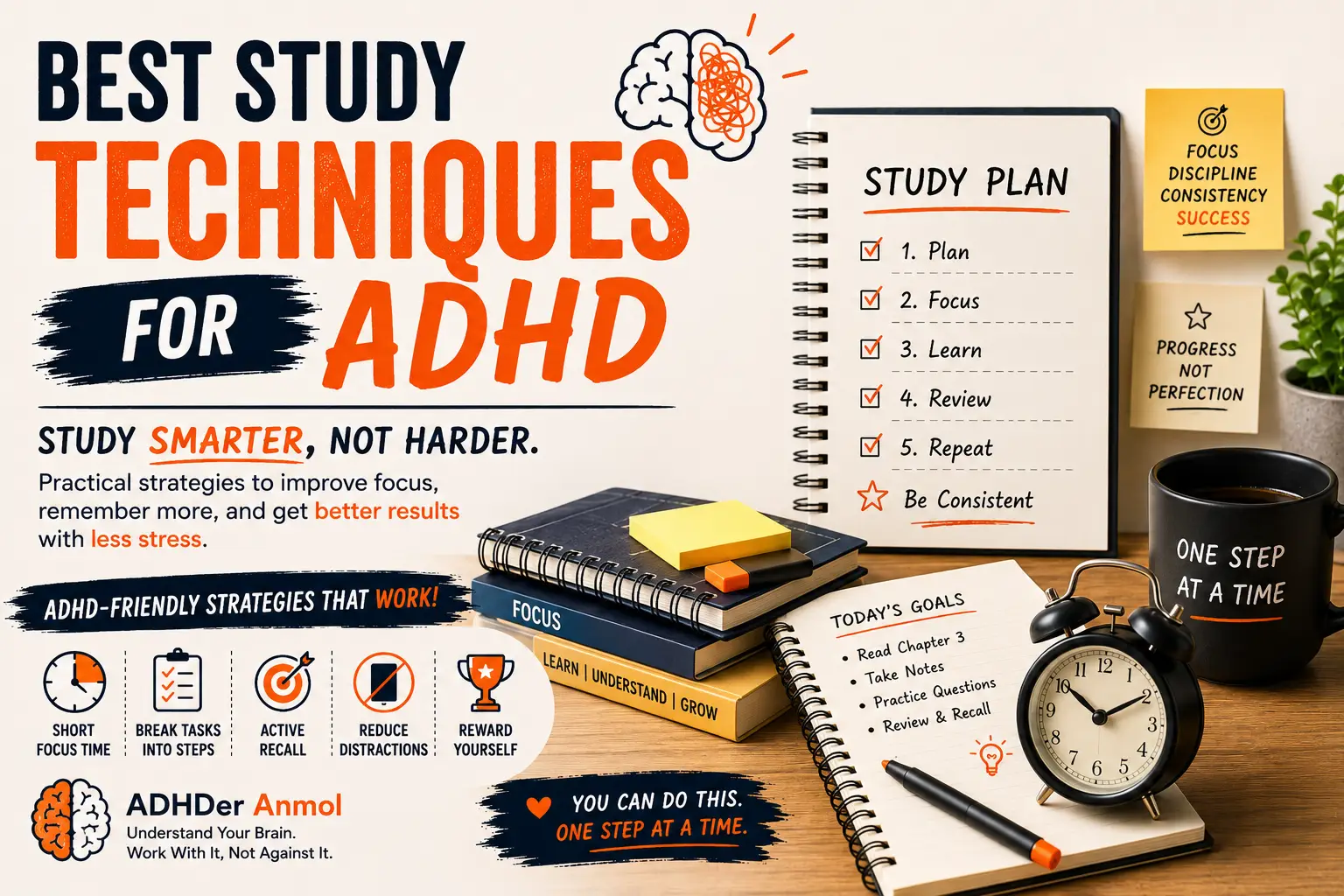
Studying with ADHD can feel like trying to read a book while someone constantly changes the TV channel. You sit down with good intentions, but within minutes you’re checking your phone, daydreaming, or forgetting what you just read.
If you’ve ever wondered, “Why can’t I study like everyone else?”, you’re not alone.
The good news is that people with ADHD can learn effectively—they often just need study techniques that work with the ADHD brain rather than against it.
In this guide, we’ll explore practical, evidence-informed strategies to help you stay focused, remember more, and reduce study-related stress.
Why Is Studying So Difficult with ADHD?
ADHD affects executive functions, including:
Sustaining attention
Working memory
Organization
Planning
Time management
Task initiation
Managing distractions
Traditional advice like “Just focus” or “Study for three hours straight” usually isn’t helpful for someone with ADHD.
Instead, shorter, structured study sessions tend to work better.
1. Study in Short Focus Sessions
Many people with ADHD lose focus during long study sessions.
Instead of forcing yourself to study for hours, try:
25 minutes of focused study
5-minute break
Repeat this four times, then take a longer break.
This is often called the Pomodoro Technique, and it can make studying feel much more manageable.
Why it works
Your brain only has to focus for a short period, reducing overwhelm and making it easier to get started.
2. Break Big Chapters into Small Goals
Looking at an entire textbook can feel overwhelming.
Instead of writing:
❌ Study Biology
Try:
✅ Read Pages 10–15
✅ Highlight key concepts
✅ Answer five questions
Completing small tasks creates momentum and makes progress easier to see.
3. Use Active Recall Instead of Re-reading
One of the biggest mistakes students make is reading the same notes repeatedly.
Instead:
Read one section.
Close the book.
Explain it in your own words.
Write down everything you remember.
This strengthens memory far more than passive reading.
4. Teach Someone Else
One of the fastest ways to learn is to teach.
Explain the topic to:
A friend
A family member
Yourself in front of a mirror
An imaginary classroom
If you can explain it simply, you probably understand it well.
5. Remove Distractions
The ADHD brain is highly responsive to external distractions.
Before studying:
Put your phone in another room.
Close unnecessary browser tabs.
Turn off notifications.
Keep only the materials you need on your desk.
A cleaner workspace can make it easier to stay on task.
6. Study at Your Best Time
Not everyone focuses best at the same time of day.
Notice when you feel most alert.
For some people it’s:
Early morning
Late afternoon
Evening
Schedule your most difficult subjects during your peak focus hours.
7. Use Color-Coded Notes
Visual organization can make studying easier.
Try using different colors for:
🟧 Definitions
🟦 Examples
🟩 Formulas
🟨 Important dates
Avoid over-highlighting. Too many colors can become distracting.
8. Move While You Learn
Many people with ADHD focus better when they’re moving.
Try:
Walking while reviewing flashcards
Standing at a desk
Stretching during breaks
Using a fidget tool if it helps you stay engaged
Movement can help some people maintain attention.
9. Create a Distraction List
Random thoughts often pop up while studying.
Instead of acting on them immediately, keep a small notebook nearby.
Write down:
Things you suddenly remember
Ideas
Tasks
Questions
Return to your study session and deal with the list later.
10. Use Visual Timers
Time blindness is common with ADHD.
A visual timer can help you:
See time passing
Stay aware of breaks
Avoid studying for too long or getting lost in one task
11. Study One Subject at a Time
Multitasking reduces focus.
Avoid switching constantly between:
Biology
Mathematics
English
Chemistry
Finish one study block before moving to another subject.
12. Reward Yourself
Your brain responds well to rewards.
After finishing a study session, enjoy something you like:
A favorite snack
A short walk
Music
A coffee break
Watching one episode of a show
Small rewards can make studying feel more motivating.
13. Get Enough Sleep
Sleep plays a major role in memory and learning.
Aim for a consistent sleep schedule whenever possible.
Studying late into the night while exhausted is often less effective than studying after adequate rest.
14. Don’t Wait for Motivation
One of the biggest myths is that you need to feel motivated before you begin.
Action often comes before motivation.
Instead of thinking:
“I’ll start when I feel ready.”
Tell yourself:
“I’ll study for just five minutes.”
Starting is often the hardest part.
15. Be Kind to Yourself
Many students with ADHD compare themselves to others.
Remember:
Everyone’s brain works differently.
Your goal isn’t to study like someone else.
It’s to discover the methods that work best for you.
Progress matters more than perfection.
Common Study Mistakes with ADHD
Avoid these habits:
Studying for hours without breaks
Leaving everything until the last minute
Reading without testing yourself
Keeping your phone nearby
Trying to multitask
Skipping sleep
Expecting perfection
Quick ADHD Study Checklist
Before you start studying, ask yourself:
✅ Is my phone out of reach?
✅ Do I know today’s goal?
✅ Have I broken the task into small steps?
✅ Is my timer ready?
✅ Have I removed distractions?
Frequently Asked Questions
Can people with ADHD study effectively?
Yes. Many people with ADHD succeed academically by using structured study methods, reducing distractions, and building routines that suit their learning style.
How long should someone with ADHD study?
Short, focused sessions (such as 20–30 minutes) with regular breaks are often more effective than long, uninterrupted sessions.
Is listening to music helpful?
It depends on the individual. Some people find instrumental or low-distraction background music helpful, while others focus better in silence.
What is the best study method for ADHD?
There’s no single best method. Many people benefit from combining short study sessions, active recall, visual organization, and minimizing distractions.