
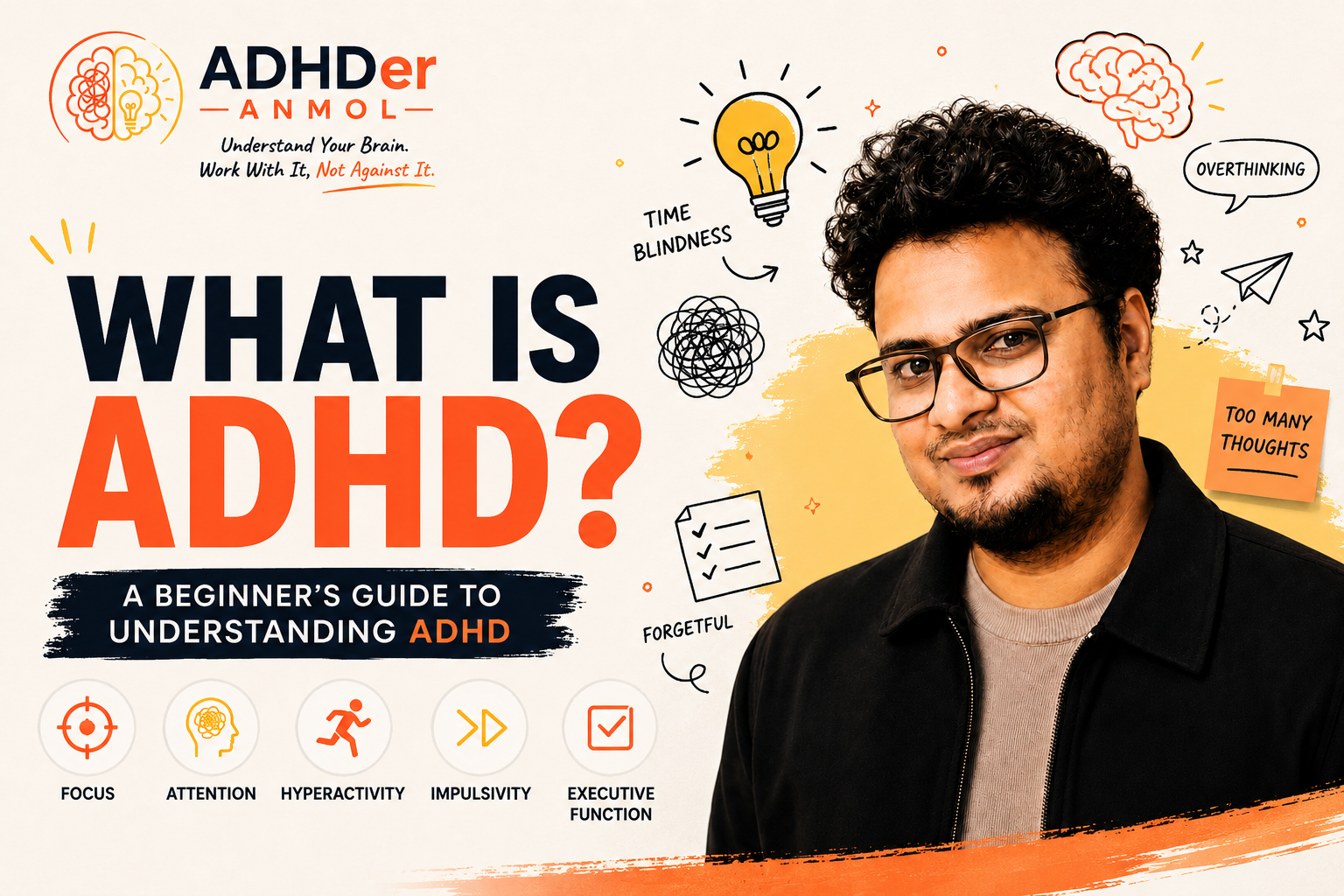
What is ADHD? A Beginner’s Guide to Understanding Attention-Deficit/Hyperactivity Disorder
If you’ve ever found yourself wondering:
- “Why can’t I stay focused?”
- “Why do I keep forgetting important things?”
- “Why do I procrastinate even when I know it’s important?”
you’re not alone.
Many people experience these challenges from time to time. But for people with Attention-Deficit/Hyperactivity Disorder (ADHD), these difficulties are more frequent, more intense, and can affect daily life, work, relationships, and education.
ADHD is one of the most misunderstood neurodevelopmental conditions. Many people still believe it’s something only children have or that it’s simply an excuse for being “lazy.”
The truth is very different.
What Does ADHD Stand For?
ADHD stands for Attention-Deficit/Hyperactivity Disorder.
It’s a neurodevelopmental condition, which means the brain develops and functions differently. ADHD is not caused by laziness, poor parenting, or a lack of intelligence.
People with ADHD often have differences in attention regulation, impulse control, activity levels, and executive functioning.
ADHD Is Not About a Lack of Attention
One of the biggest misconceptions about ADHD is that people with ADHD “can’t pay attention.”
In reality, ADHD is often about regulating attention, not simply lacking it.
Someone with ADHD may:
- Struggle to focus on routine or boring tasks.
- Become deeply absorbed (sometimes called hyperfocus) in activities they find highly interesting.
- Frequently switch between thoughts or tasks.
- Find it difficult to start or finish certain activities.
Think of attention like a volume knob rather than an on/off switch. For many people with ADHD, that knob can be difficult to control.
Common Symptoms of ADHD
ADHD affects people differently, but common symptoms include:
Inattention
You might:
- Forget appointments or deadlines.
- Lose keys, wallets, or phones.
- Become easily distracted.
- Make careless mistakes.
- Struggle to complete tasks.
- Frequently daydream.
- Have difficulty following long conversations.
Hyperactivity
Not everyone with ADHD is physically hyperactive, but some people may:
- Feel restless.
- Fidget often.
- Find it difficult to sit still.
- Talk a lot.
- Feel the need to stay constantly busy.
In many adults, hyperactivity becomes more of an internal feeling of restlessness rather than obvious physical activity.
Impulsivity
Impulsivity may include:
- Interrupting conversations.
- Making quick decisions without thinking them through.
- Spending money impulsively.
- Speaking before considering the consequences.
- Difficulty waiting your turn.
What Causes ADHD?
Researchers believe ADHD develops because of a combination of factors.
These may include:
Genetics
ADHD often runs in families. Having a parent or sibling with ADHD increases the likelihood of having it as well.
Brain Development
Research suggests there are differences in how certain areas of the brain involved in attention, planning, and self-control develop and function.
Environmental Factors
Certain environmental influences before or during birth may contribute, but ADHD is not caused by poor parenting or a lack of discipline.
Different Types of ADHD
ADHD is commonly described using three presentations:
Predominantly Inattentive Presentation
People mainly experience difficulties with focus, organization, and forgetfulness.
Predominantly Hyperactive-Impulsive Presentation
People mainly experience hyperactivity and impulsive behavior.
Combined Presentation
People experience symptoms from both inattentive and hyperactive-impulsive categories.
ADHD in Adults
Many people assume ADHD disappears after childhood.
It doesn’t.
For many individuals, ADHD continues into adulthood, although the symptoms may change over time.
Adults with ADHD may struggle with:
- Managing time.
- Staying organized.
- Meeting deadlines.
- Maintaining routines.
- Finishing projects.
- Remembering appointments.
- Managing finances.
- Balancing work and family responsibilities.
Many adults aren’t diagnosed until later in life because their symptoms were misunderstood when they were younger.
ADHD Is More Than Just Being Distracted
ADHD can also affect:
- Emotional regulation
- Motivation
- Memory
- Sleep
- Relationships
- Self-esteem
- Stress management
- Decision-making
This is why many people with ADHD feel exhausted, even when they appear successful on the outside.
How Is ADHD Diagnosed?
There is no single blood test, brain scan, or online quiz that can diagnose ADHD.
A diagnosis is made by a qualified healthcare professional, such as a psychologist or psychiatrist, after a comprehensive assessment.
This usually includes:
- Discussing your current symptoms.
- Reviewing your childhood history.
- Looking at how symptoms affect your daily life.
- Considering other conditions that may cause similar symptoms.
If you think you might have ADHD, the best next step is to speak with a qualified professional.
Can ADHD Be Treated?
Yes. While ADHD cannot currently be “cured,” many people find effective ways to manage their symptoms.
Treatment may include:
- Medication (when prescribed by a healthcare professional)
- Therapy, such as cognitive behavioral therapy (CBT)
- ADHD coaching
- Practical routines and organizational systems
- Regular exercise
- Good sleep habits
- Stress management techniques
Treatment is personal, and what works best varies from person to person.
Common Myths About ADHD
Myth: ADHD only affects children.
Fact: ADHD can continue into adulthood, and many people are diagnosed later in life.
Myth: People with ADHD are lazy.
Fact: ADHD affects executive functioning and attention regulation. Struggling with tasks is not the same as lacking motivation.
Myth: Everyone gets distracted, so everyone has ADHD.
Fact: Everyone gets distracted sometimes. ADHD involves persistent patterns of symptoms that significantly affect daily functioning.
Myth: People with ADHD aren’t intelligent.
Fact: ADHD has nothing to do with intelligence. People with ADHD can be highly creative, innovative, and successful.
My Personal Perspective
For years, I believed I simply wasn’t trying hard enough.
Growing up in a small village in Haryana, there was very little awareness about ADHD. I struggled in school, blamed myself for my difficulties, and didn’t understand why everyday tasks felt so challenging.
It wasn’t until adulthood that I received an ADHD diagnosis.
Understanding my brain didn’t instantly solve every problem, but it changed how I saw myself.
That’s why I created ADHDer Anmol—to share my journey, practical strategies, and reliable information so others don’t have to face the same confusion alone.
Final Thoughts
ADHD doesn’t mean you’re broken.
It means your brain works differently.
Learning how your brain works is one of the most important steps you can take toward building a life that works with you instead of against you.
At ADHDer Anmol, my goal is to help make that journey a little easier—through honest stories, practical tools, and evidence-based information.
Related Articles
- 10 Signs You Might Have ADHD as an Adult
- ADHD vs Laziness: Understanding the Difference
- My ADHD Diagnosis Story: What I Wish I Knew Earlier
- How to Get Diagnosed with ADHD in India
- Best Productivity Tips for Adults with ADHD
Disclaimer: This article is for educational purposes only and is not a substitute for professional medical advice, diagnosis, or treatment. If you think you may have ADHD, consult a qualified healthcare professional.